
No products in the cart.
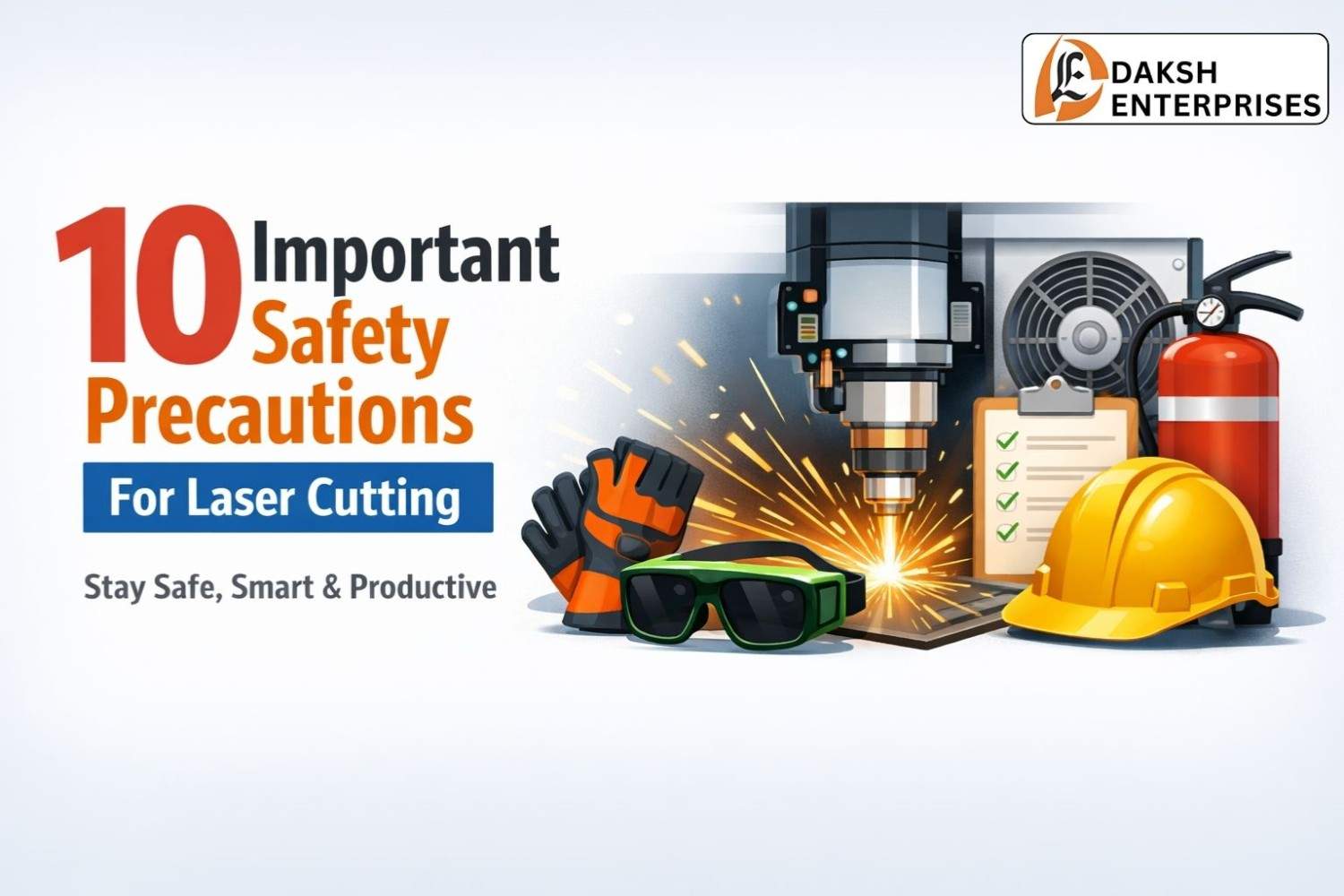
If you’re working with Laser Cutting Machines, safety isn’t optional, it’s essential. Whether you’re running industrial equipment or a hobby‑level system, understanding laser cutting safety protects you, your team, and your workspace from serious harm. In this guide, we’ll break down laser cutting precautions backed by real sources, clear logic, friendly tone, and a bit of humour (because safety doesn’t have to be boring!).
Here’s the core: laser cutting tools are powerful heat and light engines. They make sparks fly, literally. Without the right precautions, even short jobs can become unexpected fire drills or worse. Let’s dig into ten practical safety precautions you must follow.
1. Understand the Hazards Before You Begin
Laser cutters are not toys. These machines emit concentrated light that can cut through many materials. But that capability comes with risks: eye injury, burns, toxic fumes, fires, and even electrical shock are documented hazards. Industrial lasers are often classified as Class 4, the highest risk level, meaning exposure can cause instant damage to eyes or skin.
Why it matters: awareness prevents careless mistakes.
Quick Tip: Never guess if a material is safe without checking manufacturer’s specs or safety sheets first.
2. Always Wear Protective Gear
Safety gear isn’t a fashion statement; it’s lifesaving.
Must‑have protective equipment:
- Laser‑rated safety goggles matched to your laser wavelength (especially outside closed enclosures)
- Heat‑resistant gloves
- Coveralls and closed‑toe shoes
Eye damage from even brief exposure to the laser beam can be permanent.
Humour moment: “Regular sunglasses don’t cut it, unless you want to look cool with permanent retinal souvenirs.”
3. Only Trained & Authorized Users Should Operate the Machine
Laser cutter safety rules are not common sense; they are technical safety procedures learned through training. Always ensure operators are properly trained and familiar with both the machine and hazards.
Why training matters:
- Correct machine setup
- Knowing emergency stops
- Proper material handling
- Quick reaction if something goes wrong
No one should use a laser cutter without instructions from a trained person. That’s the difference between confidence and catastrophe.
4. Proper Ventilation Prevents Toxic Fume Exposure
When materials are cut by a laser, they often produce smoke and fumes, and some materials produce harmful gases. PVC plastic, for example, emits hydrogen chloride gas when cut.
Safety step: install a quality exhaust system or a fume extractor that pulls contaminants away from the operator and workspace.
And yes, that ventilation matters even more than your favourite fan or open window.
5. Never Leave the Laser Cutter Unattended
This might be the simplest tip, and the most ignored. Laser cutting jobs can start fires in seconds.
You must supervise the machine throughout the entire cut operation.
A tiny flare‑up left unsupervised can turn into a charred disaster before you even finish your coffee.
Remember: lasers don’t text “I’m about to catch fire.” They just do it.
6. Know What Materials Are Safe & What Materials Are Not
Not all materials are created equal. Some are safe for laser cutting; some are fire hazards, and others release toxic chemicals when heated.
Unsafe or risky materials:
- PVC and vinyl plastics
- Fibreglass and carbon fibre composites
- Polyurethane and certain foams
Before you cut a material, check its Safety Data Sheet (SDS) or manufacturer guidance. When in doubt, don’t cut it.
7. Maintain Cleanliness And Fire Prevention
Laser cutting produces dust, debris, and small particles, and those can ignite if left to accumulate.
Best housekeeping practices:
- Clean the cutting deck daily
- Vacuum inside the laser cavity regularly
- Keep the area around the machine free of clutter and flammable materials
Combine this with having a proper fire extinguisher nearby, ideally a CO₂ or dry chemical type, and you’re significantly reducing fire risk.
“A clean workspace is like flossing your teeth; you forget how important it is until you skip it.”
8. Check Safety Features Before Each Use
Most laser cutters come with built‑in safety systems like interlocks and door covers that prevent accidental exposure to the beam. These must never be disabled.
Before every session:
✔️ Ensure all safety covers are in place
✔️ Confirm interlocks are functioning
✔️ Test emergency stop buttons
By keeping safety features intact, you reduce the chance of injuries or equipment damage.
9. Never Modify the System or Bypass Safety Controls
Modifying the laser’s safety setup because “it’s just easier” is never a good idea. These controls, interlocks, enclosures, ventilation exist because engineers and safety bodies like OSHA and ISO design them that way.
Bypassing guards or safety systems:
❌ Voids warranties
❌ Increases risk of accidents
❌ Can lead to legal liabilities
❌ Makes insurance claims complicated or impossible
Keep everything in its original safety configuration.
10. Track Use and Log Important Details
Keeping a logbook, even for non‑industrial setups, is a smart idea.
What to record:
- Who used the laser cutter
- Materials cut
- Duration of cut jobs
- Any issues noticed
- Maintenance actions taken
Aside from promoting responsible use, this helps you spot trends, avoid repeating mistakes, and build a safety culture in your workshop.
Regularly Inspect Your Laser Equipment
Routine maintenance is essential for the proper operation of the laser cuter systems. Operators should observe lens cleanliness, mirror alignment, cooling system status and electrical connection prior to every run. Contaminated optics may reflect laser beams in unpredictable ways, which can lead to an increase in laser cutting hazards.
Equipment like a CO2 Laser Engraving Machine needs to be cleaned and calibrated from time to time to ensure safe and precise functioning. Preventive maintenance is a win for the operators and a win for the equipment, and a win for the bottom line.
Bonus Tips For Real‑World Safety
Laser cutter safety doesn’t stop at the machine.
- Install smoke detectors close to the workspace; early alerts save property and lives.
- Invest in training software or checklists for new users.
- Review the Material Safety Data Sheets (SDS) before cutting anything unfamiliar.
- Test ventilation systems regularly to ensure they’re working properly.
Key Lessons on Laser Cutting Safety
Laser cutting safety isn’t just a checklist; it’s a mindset. Following these laser cutting precautions saves lives, protects property, and gives you confidence to operate with clarity and professionalism. Treat your workspace like a laboratory, because in some ways, it is. Serious tools deserve serious respect.
If you’re in search of reliable equipment and professional support, don’t forget to check out Laser Cutting Machines from Daksh Enterprises on Google. They’re a trusted presence with real‑world expertise and solutions.