
No products in the cart.
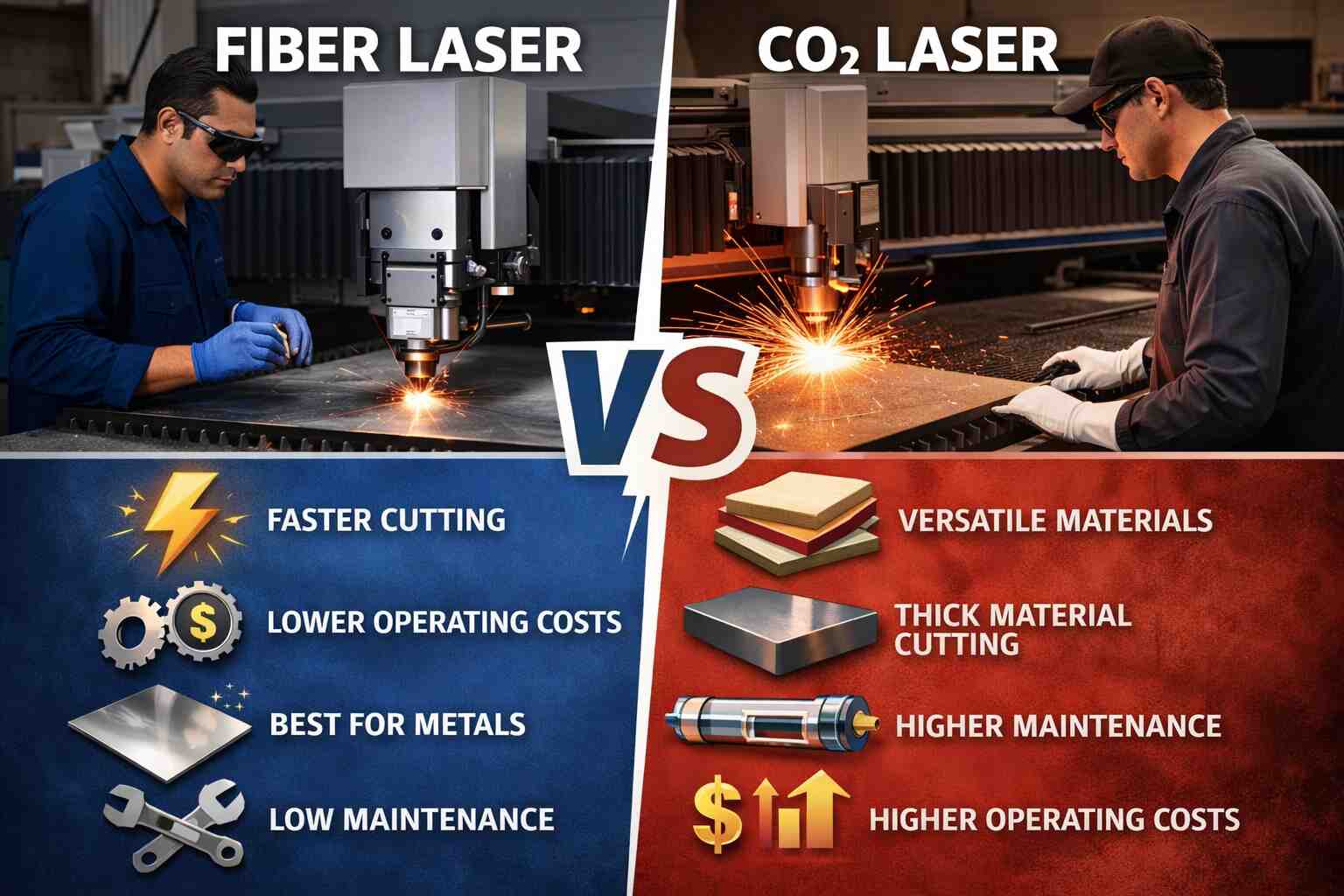
Choosing the correct laser technology creates a dilemma that resembles the choice between tea and coffee. Both work. Both have loyal fans. The productivity system of your business and the expenses your company incurs and the future development of your enterprise will depend on your difference between fiber laser and co2 laser.
The guide will assist you in making a better decision about your fiber laser marker investment because it provides authentic industry information which counteracts marketing exaggerations.
Let’s break it down in simple terms, with a touch of humor and a lot of logic.
Understanding the Basics: Fiber Laser vs CO2 Laser
A fiber laser machine uses optical fiber and diode technology to generate a laser beam. A CO2 laser machine creates infrared light through a process that involves using a gas mixture which contains mainly carbon dioxide.
The technical distinction between these two systems appears minor yet it transforms all aspects of the system including cutting speed and system upkeep.
Here’s the simple rule many manufacturers follow:
- Fiber lasers work best for metals
- CO2 lasers work best for non-metals like wood, acrylic, and fabric
The experts from the industry show that fiber lasers operate at faster metal cutting speeds while delivering better precision results than CO2 lasers which perform better on organic materials.
The difference between fiber lasers and CO2 lasers demonstrates that their superiority depends on specific job requirements.
Key Difference Between Fiber Laser and CO2 Laser
Let’s get practical. Below are the most important factors business owners consider when evaluating the difference between fiber laser and co2 laser technologies before buying a machine.
1) Speed and Productivity
Speed matters. Especially when deadlines chase you harder than your morning alarm.
Fiber lasers typically cut thin metals 3 to 5 times faster than traditional CO2 systems.
That speed advantage means:
- Faster production cycles
- Higher output per shift
- Better profit margins
If your business depends on metal cutting or marking, a fiber laser marker often delivers faster turnaround times.
2) Energy Efficiency and Operating Cost
Electricity bills rarely make anyone smile.
Fiber lasers convert more electrical energy into laser power. Many systems achieve 25–35% efficiency, compared to about 8–15% for CO2 lasers.
In simple words:
- Fiber lasers use less power
- CO2 lasers consume more electricity
Over time, this difference can significantly affect your operating budget.
3) Maintenance and Machine Life
Machines are like cars. The less maintenance we need, the happier your accountant becomes.
Fiber laser systems often last up to 25,000 working hours and require minimal servicing because we use solid-state components.
CO2 machines, on the other hand, need:
- Gas refills
- Mirror alignment
- Regular cleaning
That doesn’t make them bad. It simply means we require more attention.
Also Read : Why Every Manufacturer Is Switching to Portable Fiber Laser Markers in 2026
Material Compatibility: What Can Each Laser Handle?
This is where the difference between fiber laser and co2 laser becomes crystal clear.
Fiber Laser Machine — Best for Metals
Common applications include:
- Stainless steel
- Aluminum
- Brass
- Copper
- Industrial parts
Fiber lasers excel at metal processing because their shorter wavelength creates a highly concentrated beam.
That concentration improves precision and cutting speed.
CO2 Laser Engraving Machine — Best for Non-Metals
Typical materials include:
- Wood
- Acrylic
- Leather
- Rubber
- Glass
- Fabric
CO2 lasers absorb energy better in organic materials, which makes them ideal for engraving and decorative work.
If your business focuses on signage, crafts, or packaging, a Co2 laser engraving machine often makes more sense.
Cost Comparison: Initial Price vs Long-Term Value
Here’s where many buyers pause.
Upfront Cost
CO2 machines usually cost less initially.
Fiber laser systems often require a higher investment.
That’s the short story.
Long-Term Cost
Fiber lasers typically save money over time because Daksh Enterprises:
- Use less electricity
- Need less maintenance
- Run faster
Many manufacturers report operating costs that are significantly lower for fiber systems compared to CO2 machines.
So the real question becomes:
Do you want to save today or save for the next five years?
Real-World Use Cases: Which Businesses Choose What?
Let’s keep this practical.
Choose Fiber Laser If You Run:
- Metal fabrication shops
- Automotive component manufacturing
- Tool and hardware production
- Industrial marking services
A reliable fiber laser marker helps businesses produce precise, permanent marks on metal surfaces quickly.
Choose CO2 Laser If You Run:
- Sign-making businesses
- Gift and craft shops
- Packaging companies
- Furniture or wood industries
A Co2 laser engraving machine delivers smooth finishes and detailed designs on non-metal materials.
Local Support and Service Matter More Than You Think
Here’s the truth many buyers learn the hard way.
The machine matters.
But support matters more.
Reliable suppliers provide:
- Installation guidance
- Maintenance support
- Spare parts availability
- Technical training
The Google My Business profile of Daksh Enterprises provides visitors with access to the business location which we can use to discover trusted equipment and service options. The use of a local provider results in two benefits which include decreased downtime and enhanced long-term system reliability.
Fiber Laser vs CO2 Laser: Quick Comparison Table
| Feature | Fiber Laser | CO2 Laser |
| Best For | Metals | Non-metals |
| Speed | Very fast | Moderate |
| Energy Use | Low | Higher |
| Maintenance | Low | Higher |
| Initial Cost | Higher | Lower |
| Precision | High | High |
Both technologies perform well. The right choice depends on your materials and production goals.
Final Thoughts: Which One Is Best for Your Business?
There is no universal winner in the fiber laser vs CO2 laser debate.
Instead, the best machine depends on:
- Your material type
- Your production volume
- Your budget
- Your long-term growth plan
If you work mostly with metal, a fiber system usually offers better efficiency and speed.
If you handle wood, acrylic, or fabric, a Co2 laser engraving machine remains a reliable choice.
Smart businesses evaluate their workflow before investing. That simple step prevents expensive mistakes later.
Contact Us
Still unsure which laser technology fits your business?
No problem—that’s exactly what we’re here for.
Our team can help you:
- Compare machines
- Understand costs
- Choose the right technology
- Plan your production setup
Contact us today to discuss your requirements and get expert guidance tailored to your business goals.