
No products in the cart.
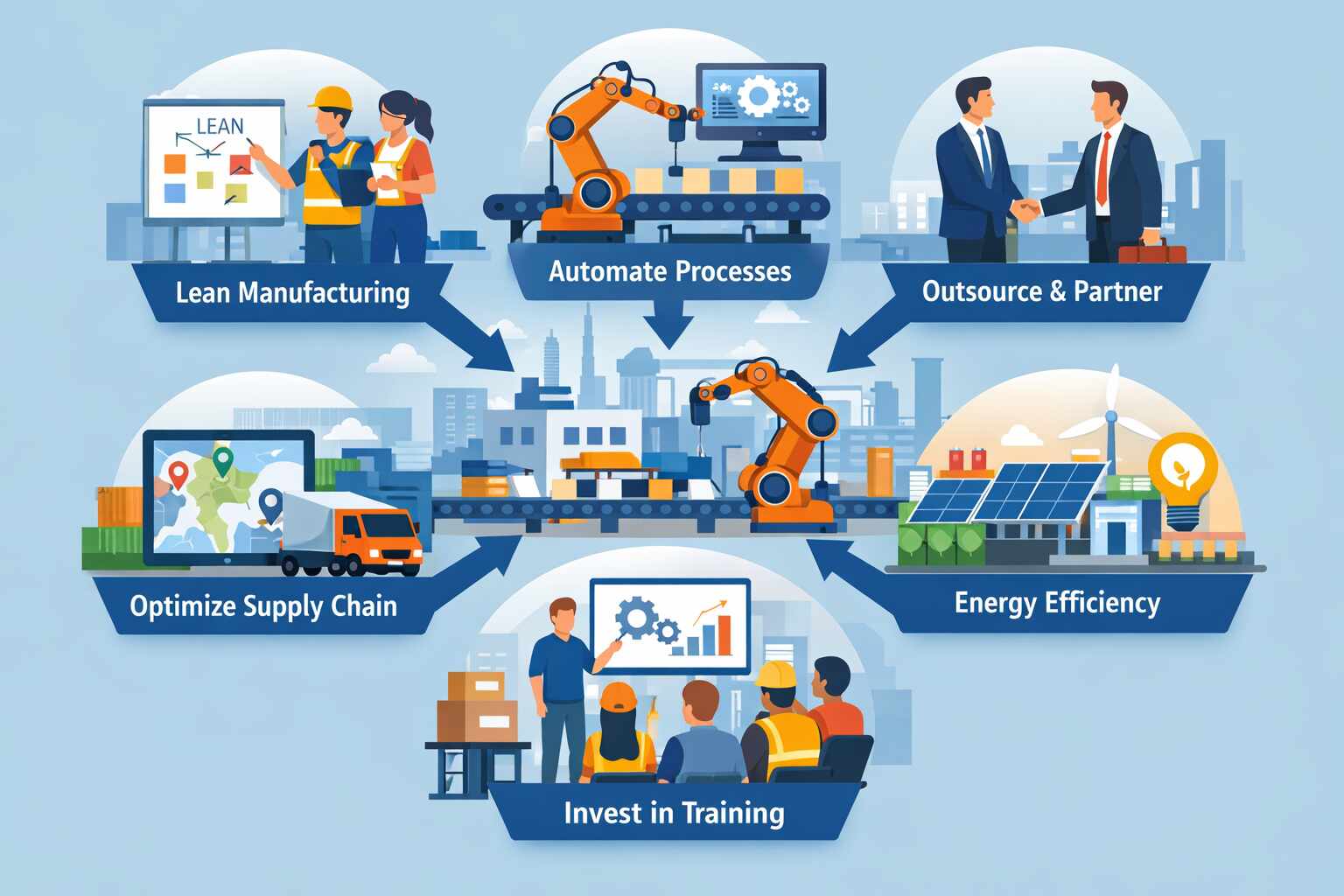
Expanding a factory does not necessarily imply acquisition of larger machines or a large force of laborers. Most owners are interested in expanding the manufacturing business processes and maintaining the cost constant. That is a goal that sounds tricky but modern manufacturing demonstrates that it is possible.
And, should you be operating a small scale manufacturing business, you are already aware of the fact that margins can be as tight as a jar lid after pickle season. Real growth, not costly upgrades, is facilitated by smart strategies. To illustrate, investing in the appropriate technology, e.g. CNC engraving machine, usually enhances precision and waste minimization simultaneously.
This guide will include some research-based practical techniques that will help you in the expansion of manufacturing business without necessarily tapping into your budget. All the tips are based on reputable industry habits and real-life information.
1. Focus on Process Optimization Before Buying New Equipment
When the production is slow many manufacturers are rushing to buy new machines. That action makes sense, yet it tends to conceal more underlying inefficiencies.
Begin by mapping your workflow. Determine delays, bottlenecks and redundant steps. Minor changes can significantly enhance production.
A 2024 McKinsey and Company report indicates that in a manufacturing setting, only process optimization is capable of increasing productivity by up to 20 percent. That profit can come without significant outlay.
Fast fact: Assess production information at the end of the week. Problems can be identified by numbers quicker than by guess work.
2. Train Employees to Work Smarter, Not Harder
The knowledge that your workforce possesses is valuable. It is opened by proper training.
Cross training employees enable the teams to alternate roles when there is high demand. This flexibility will assist you in increasing the production capacity without the need of hiring new employees.
Mistakes are also minimized through training. Reduced errors imply reduced rework, scrap and operation costs. Everybody is a winner, even your accountant.
The World Economic Forum underscores the fact that continuous training of the workforce is among the most economical means of enhancing manufacturing performance.
3. Use Preventive Maintenance to Avoid Expensive Breakdowns
Machines do not go out of commission often. They tend to scream after whispering.
Preventive maintenance maintains equipment in good operation and prolongs its life. It also cushions production regimes against unexpected disturbances.
According to the U.S. Department of Energy, preventive maintenance may help decrease equipment downtime by 30 to 50 percent. That enhancement is a direct contribution to the endeavor to increase the manufacturing business operations without escalating the costs.
Prepare a rudimentary service schedule. Stick to it. Your machines will be grateful– silent.
4. Adopt Automation Where It Makes Financial Sense
Automation does not imply the replacement of people. It involves elimination of redundant activities that delay them.
To illustrate, automated systems combined with laser cutting machines would be able to make accurate cuts quicker than manual jobs. There is now an opportunity to focus on quality control, design or customer service by workers.
Consistency is also enhanced by automation. Regular production saves on time wastage and preserves brand integrity.
A Deloitte study of manufacturing reveals that operational costs in a given manufacturing sector can be reduced by 15- 25 percent with targeted automation increasing productivity with time.
5. Reduce Material Waste Through Better Design
Profits are consumed more quickly by waste than they are by termites.
Efficient product design reduces wastage of materials. Computer-aided modeling software assists engineers to test a design prior to the production process. That method conserves raw materials and reduces the time of development.
Resource efficiency can be observed to improve significantly when manufacturers are using sophisticated design tools. These are improvements that enhance business growth in the long term in manufacturing.
Even minor design modifications can result in large savings in thousands of units.
6. Build Strong Supplier Relationships
Trustworthy suppliers are your silent partners in the growth process.
The long-term contracts can be negotiated to obtain improved prices and regular delivery dates. The constant supply will lessen production delays and avoid emergency buying at inflated costs.
The suppliers will also suggest better materials or technologies. These understandings enable companies to work harder to produce without making huge expenditures.
Consider the suppliers as partners, not suppliers.
7. Invest in Data and Production Analytics
Data eliminates emotion in decision making.
The current manufacturing programs monitor the speed of production, downtimes, and quality of output in real-time. Managers are able to detect and correct issues at an early stage before costs escalate.
Demand can also be predicted based on analytics. Proper forecasting eliminates excess production and lowers inventory costs.
The 2023 PwC manufacturing survey showed that data-driven decision-making companies have high operational efficiency and better profit margins.
8. Optimize Floor Layout for Faster Workflow
Productivity is more dependent on factory layout than the owners are aware.
Having a neat workspace will save time and help to prevent injuries and wastage of space. Employees will be able to accomplish work more quickly when their tools and materials are within reach.
As an example, laser cutting machines could be placed nearer to assembly stations, which would reduce the production cycle and enhance the efficiency of work.
This is a low-cost strategy that gives a visible outcome.
9. Strengthen Your Online Presence to Attract More Orders
The growth is not necessarily beginning at the factory floor. It can be initiated on Google sometimes.
Before customers make a call to a manufacturer, they tend to search online. An optimized Google Business profile enables the potential client to locate your services rapidly.
When you provide specialized machinery such as a CNC engraving machine, ensure that people can find information about your company without any hassle. To illustrate, businesses like Daksh Enterprises have an active profile on Google My Business to ensure consumers do not get their location, services, and contact information mixed up.
Digital presence facilitates constant order flow which assists companies to increase production capacity without necessarily raising marketing expenses.
10. Standardize Operations to Maintain Consistent Quality
Consistency builds trust. Repeat business is created through trust.
Standard operating procedures help to maintain the same quality standards of all products. Clear guidelines minimize mistakes and enhance team performance.
New employees are also simplified through standardization. Training is more predictable and quicker.
Most manufacturers combine standard workflow with high technology equipment such as a CNC cutting machine to ensure consistency over a substantial scale of production.
Customers remain loyal when quality remains the same. During marketing, loyal customers also cut the costs and help in sustainable growth.
Final Thoughts: Smart Growth Beats Expensive Growth
Manufacturing companies do not need an unlimited budget and flashy equipment to scale. It involves discipline, planning and improvement.
Any manufacturing company can expand manufacturing business operations without augmenting expenses by streamlining processes, training staff, and making decisions that are sound on the use of technology. They are effective in both startups and factories that are already established.
Keep in mind that growth does not mean working harder. It is about working smarter – and sometimes cracking a joke when a machine does something better than it was supposed to do.