
No products in the cart.
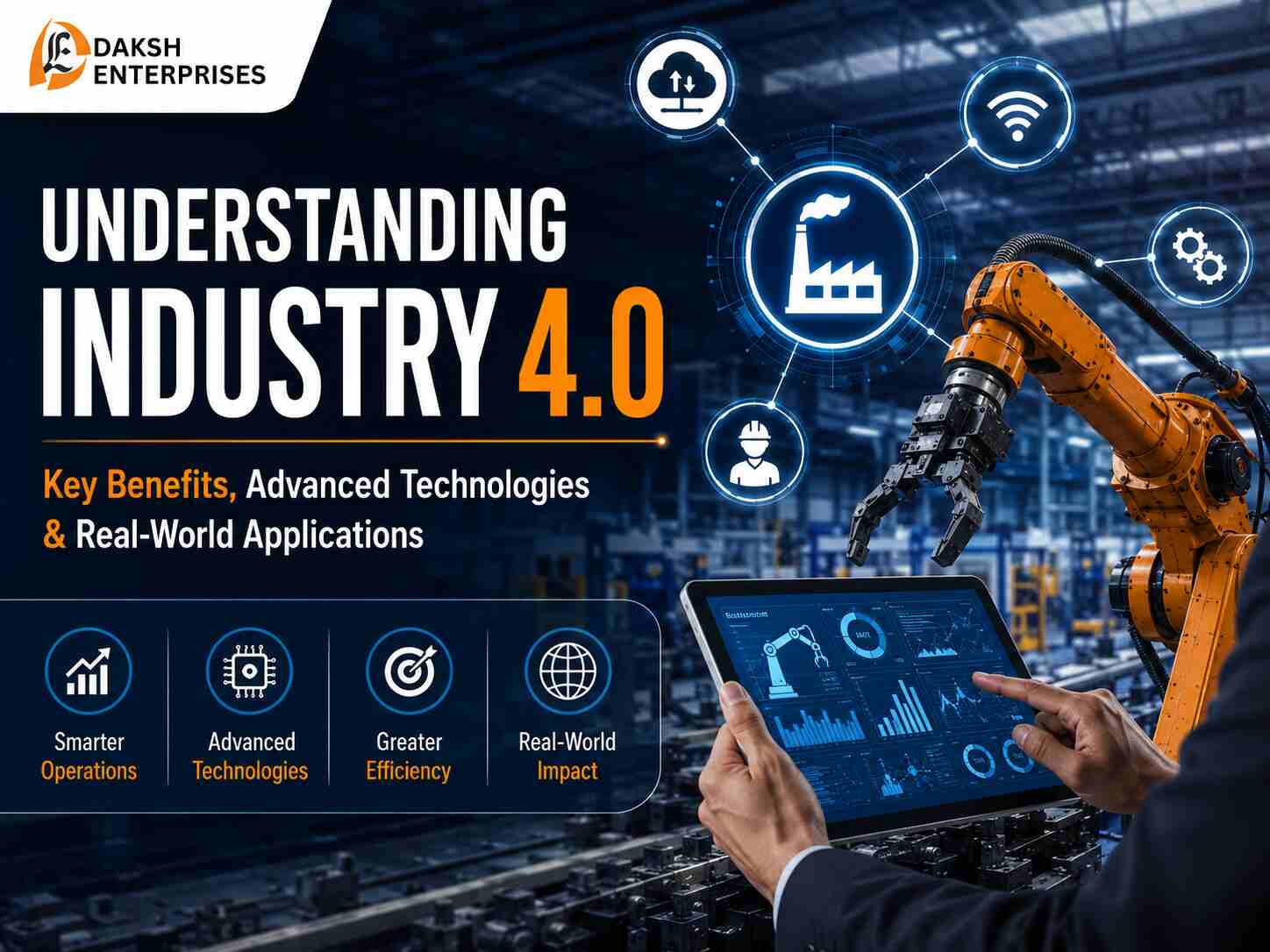
Manufacturing no longer operates the way it did a few decades ago. A modern factory floor often includes connected machines, digital dashboards, automated systems, and real-time data tracking. These tools help manufacturers improve productivity, reduce waste, and make faster decisions.
This transformation is known as Industry 4.0. If you are asking what is industry 4.0, the simple explanation is that it represents the integration of digital technologies into manufacturing and industrial processes. Instead of operating in isolation, machines, software, sensors, and data systems work together to create smarter and more efficient production environments.
Modern industrial tools already demonstrate this shift. For example, a Fiber Laser Marker helps manufacturers create precise and durable markings on products, improving traceability and quality control. Businesses also use solutions such as ECO Solvent Machine systems to support specialised printing and industrial applications within a digitally connected workflow.
Understanding Industry 4.0
Industry 4.0 is often called the fourth industrial revolution. It builds on previous industrial revolutions by combining physical manufacturing with digital technologies. The result is a smart factory where machines can communicate, analyse data, and optimise processes with minimal human intervention.
The Four Industrial Revolutions
- Industry 1.0: Introduced mechanization through steam power.
- Industry 2.0: Enabled mass production through electricity and assembly lines.
- Industry 3.0: Brought computers, electronics, and basic industrial automation into manufacturing.
- Industry 4.0: Connects machines, data, software, and people to create intelligent manufacturing systems.what is industry 4.0
A simple way to remember it: Industry 1.0 gave factories power, Industry 2.0 gave them speed, Industry 3.0 gave them computers, and Industry 4.0 gives them intelligence.
Core Industry 4.0 Technologies
Industry 4.0 relies on several connected technologies that enable digital transformation in manufacturing.
Internet of Things (IoT) and IIoT
Internet of Things (IoT) connects devices and sensors to the internet. In industrial settings, the Industrial Internet of Things (IIoT) connects machines, production equipment, and factory systems. This allows connected machines to share data and improve industrial connectivity.
Artificial Intelligence and Machine Learning
Artificial Intelligence in manufacturing helps factories analyze large amounts of data and make smarter decisions. Machine learning allows systems to identify patterns, predict failures, and optimize production without constant manual supervision.
Cloud Computing
Cloud computing provides storage and processing power for industrial data. Manufacturers can access information from multiple locations and scale their operations more efficiently.
Big Data Analytics
Factories generate significant amounts of information every day. Big data analytics helps businesses analyze this data to improve quality control, reduce downtime, and support manufacturing process optimization.
Cyber-Physical Systems
Cyber-physical systems combine physical machinery with digital software. They enable machines to monitor their own performance and interact with other systems in real time.
Predictive Maintenance
Predictive maintenance uses sensors and data analysis to identify potential equipment failures before they occur. This reduces unexpected downtime and helps companies save on repair costs.
Also Read: Top 10 Small Manufacturing Machines for Startups
Benefits of Industry 4.0
Understanding what is industry 4.0 becomes easier when you consider its practical benefits.
Improved Productivity
Automation and connected systems help factories produce more with fewer delays. Machines can operate continuously and communicate issues instantly.
Better Quality Control
Real-time monitoring helps detect defects early. This reduces waste and improves product consistency.
Reduced Downtime
Predictive maintenance alerts businesses about potential equipment problems before they cause production stoppages.
Cost Savings
Industry 4.0 reduces waste, energy consumption, and unnecessary maintenance costs. It also helps optimize resource allocation.
Faster Decision-Making
Industrial data analytics provides managers with real-time insights, allowing them to respond quickly to changing production conditions.
Enhanced Flexibility
Smart factories can adapt to changes in customer demand more easily. Production lines can switch between products with less manual adjustment.
Also Read: 10 Best Laser Engraver for Small Businesses (Beginner to Pro Guide)
Real-World Applications of Industry 4.0
Industry 4.0 is already transforming many industries through intelligent manufacturing and automation solutions.
Automotive Manufacturing
Car manufacturers use robotics, IoT sensors, and AI-driven quality control to increase efficiency and reduce defects.
Electronics Production
Electronics manufacturers rely on precise marking and tracking systems. A Fiber Laser Marker helps create durable markings on components, improving traceability and quality assurance.
Packaging and Printing
Printing and packaging industries use advanced digital systems to improve speed and accuracy. An ECO Solvent Machine supports high-quality printing applications while contributing to efficient production workflows.
Healthcare Equipment Manufacturing
Medical device manufacturers use smart factory technologies to maintain strict quality standards and ensure product traceability.
Energy and Utilities
Industry 4.0 technologies help energy companies monitor equipment, predict maintenance needs, and optimize resource distribution.
Industry 4.0 and Smart Factories
A smart factory is one of the clearest examples of Industry 4.0. In a smart factory, machines, sensors, and software systems work together to create a connected production environment.
Characteristics of a Smart Factory
- Connected machines that communicate with each other.
- Real-time monitoring of production processes.
- Automated decision-making based on data analysis.
- Flexible production systems that adapt to changing demands.
- Improved resource management through industrial data analytics.
Imagine a factory where a machine detects a performance issue, sends an alert, and schedules maintenance automatically. That is Industry 4.0 explained in a practical way.
The Role of Industrial Equipment
Industrial equipment plays an important role in the transition to Industry 4.0. Modern machinery often includes sensors, digital controls, and connectivity features that support manufacturing automation.
For example, a Fiber Laser Marker can integrate with digital production systems to provide precise product identification and tracking. Businesses searching for reliable industrial equipment can explore options through Daksh Enterprises, which may be found on Google My Business for location details.
Similarly, an ECO Solvent Machine can contribute to efficient printing operations within a digitally connected manufacturing environment.
Challenges in Implementing Industry 4.0
While Industry 4.0 offers many benefits, businesses may face challenges during implementation.
Initial Investment
Upgrading equipment and digital systems can require significant investment.
Cybersecurity Risks
Connected machines and cloud-based systems require strong security measures to protect industrial data from cyber threats.
Skill Gaps
Employees may need training to work effectively with advanced factory automation systems and digital tools.
System Integration
Older machinery and software systems may need adjustments to integrate with modern industry 4.0 technologies.
Leading Companies and Organizations
Several global companies and organizations contribute to the advancement of Industry 4.0:
- World Economic Forum
- Siemens
- Rockwell Automation
- ABB
- Schneider Electric
- Mitsubishi Electric
- Bosch
- Honeywell
- Cisco
- Microsoft
- Amazon Web Services
These organizations develop technologies, standards, and solutions that support digital transformation and future of manufacturing initiatives.
The Future of Manufacturing
The future of manufacturing will likely involve even greater integration of AI, IoT, robotics, and data analytics. Factories will become more autonomous, efficient, and responsive to customer demands.
Industry 4.0 also supports sustainability by reducing waste, improving energy efficiency, and optimizing resource use. As technology continues to evolve, businesses that adopt intelligent manufacturing practices may gain a stronger competitive advantage.
Conclusion: What Is Industry 4.0 and Why Does It Matter?
So, what is industry 4.0? It is the transformation of manufacturing through connected technologies, real-time data, and intelligent automation. Industry 4.0 helps businesses improve productivity, reduce downtime, enhance quality, and make better decisions.
From Fiber Laser Marker systems to ECO Solvent Machine solutions, modern industrial equipment plays an important role in this digital transformation. Companies such as Daksh Enterprises can support businesses in finding suitable industrial solutions for their manufacturing needs.
As smart factories and connected machines become more common, Industry 4.0 will continue shaping the future of manufacturing and industrial automation. For reliable industrial solutions, contact us to learn how Daksh Enterprises can support your business needs.
Frequently Asked Questions (FAQs)
What is Industry 4.0?
Industry 4.0 is the fourth industrial revolution that integrates digital technologies such as the Internet of Things (IoT), Artificial Intelligence (AI), cloud computing, robotics, and data analytics into manufacturing. These technologies help businesses automate processes, improve productivity, and make data-driven decisions.
What are the key technologies used in Industry 4.0?
The main Industry 4.0 technologies include the Internet of Things (IoT), Industrial Internet of Things (IIoT), Artificial Intelligence (AI), machine learning, cloud computing, big data analytics, cyber-physical systems, digital twins, robotics, and predictive maintenance.
What is a smart factory?
A smart factory is a manufacturing facility where connected machines, sensors, and software communicate in real time. This allows manufacturers to automate production, monitor equipment, improve quality, and reduce downtime.
What are the benefits of Industry 4.0?
Industry 4.0 helps manufacturers increase productivity, reduce operating costs, improve product quality, minimize downtime, enhance workplace safety, optimize energy use, and make faster business decisions using real-time data.
How does the Internet of Things (IoT) support Industry 4.0?
The Internet of Things (IoT) connects machines, sensors, and equipment through the internet, enabling real-time monitoring and data collection. This helps manufacturers identify issues early, improve efficiency, and automate production processes.
What is predictive maintenance in Industry 4.0?
Predictive maintenance uses sensor data, Artificial Intelligence, and machine learning to detect potential equipment issues before they lead to failures. This approach helps reduce unexpected downtime and lowers maintenance costs.
Which industries use Industry 4.0 technologies?
Industry 4.0 is widely used in automotive, aerospace, electronics, metal fabrication, woodworking, textiles, healthcare, packaging, logistics, and food processing. Businesses of all sizes can benefit from digital manufacturing technologies.
How does Industry 4.0 improve manufacturing efficiency?
Industry 4.0 improves efficiency by automating repetitive tasks, optimizing production schedules, reducing waste, enabling real-time monitoring, and providing valuable insights through industrial data analytics.
Is Industry 4.0 suitable for small and medium-sized businesses?
Yes. Small and medium-sized businesses can adopt Industry 4.0 gradually by implementing automation solutions, connected machines, cloud-based software, and smart production tools based on their budget and operational needs.
How can manufacturers prepare for Industry 4.0?
Manufacturers can begin by assessing their current production systems, investing in digital technologies, training employees, strengthening cybersecurity, and adopting scalable automation solutions that support long-term growth.