
No products in the cart.
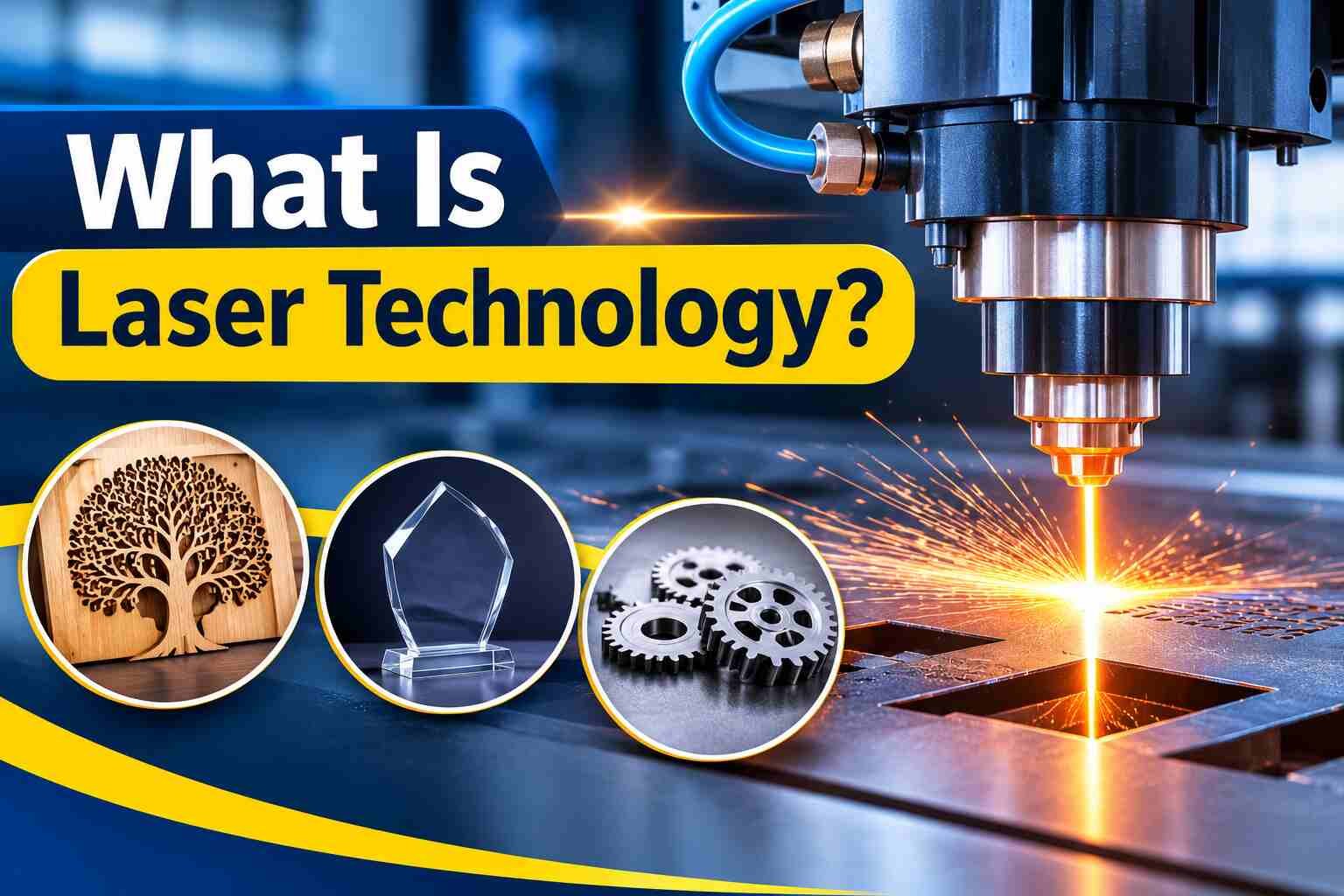
Laser technology has changed how industries cut, engrave, mark and process materials. From a laser metal cutting machine used in fabrication to precision engraving equipment, lasers help businesses perform specialised tasks with accuracy. Even supporting equipment such as laser chillers plays an important role by controlling heat and helping maintain stable machine performance. But What Is Laser Technology, how does it work, and why do so many industries use it?
In simple terms, laser technology uses a concentrated beam of light to perform specific tasks. Depending on the laser source, power and application, the beam can cut, engrave, mark, weld or clean different materials. This guide explains the science, major types, industrial applications, benefits and safety considerations behind modern laser systems.
What Is Laser Technology?
LASER stands for Light Amplification by Stimulated Emission of Radiation. It describes a process that generates and amplifies light through stimulated emission.
Unlike ordinary light, laser light typically has a narrow wavelength range, strong directionality and high coherence. These properties allow a laser system to concentrate optical energy into a controlled beam.
A laser produces electromagnetic radiation, which may fall within the visible, infrared or ultraviolet regions of the spectrum. The wavelength depends on the laser medium and system design.
This focused energy makes laser technology useful in manufacturing, healthcare, communication, research and many other fields. According to the US Food and Drug Administration (FDA), laser products support applications ranging from material processing to medical procedures and optical equipment.
Also Read: Top 15 Best Manufacturing Business in India for 2026 – Investment, Profit & Opportunities
How Does Laser Technology Work?
To understand What Is Laser Technology, it helps to look at the process behind the beam.
A typical laser system contains three essential elements:
- Gain medium: The material that produces and amplifies light. It may be a gas, crystal, semiconductor or another suitable medium.
- Energy source: Supplies energy to excite the gain medium.
- Optical cavity: Uses reflecting mirrors to send light through the medium and support amplification.
Here is how the process works:
- Energy enters the gain medium
An energy source excites atoms, molecules or electrons in the gain medium. This process moves them into higher energy states.
- Photons are released
When excited particles return to lower energy states, they release energy as photons. These photons carry optical energy.
- Stimulated emission amplifies the light
A photon with the right energy can trigger an excited particle to release another photon with matching properties. This process is called stimulated emission.
- The optical cavity strengthens the light
Photons move back and forth between reflecting mirrors inside the optical cavity, also called a laser resonator. This process helps amplify the light.
- A laser beam exits the system
One mirror allows part of the amplified light to leave the cavity. The resulting laser beam travels towards the material or target through an appropriate beam delivery system.
A focusing lens or laser head can then direct the beam onto a small area, depending on the machine design.
Also Read : Top 10 Small Manufacturing Machines for Startups
What Are the Main Types of Laser Technology?
Different applications require different wavelengths, power levels and operating characteristics. Therefore, choosing the right laser source matters as much as choosing the machine itself.
1. Fiber Laser
A Fiber Laser uses an optical fiber doped with suitable elements as its gain medium. Industrial fiber laser systems are widely used for metal cutting, welding, marking and engraving.
A fiber laser machine can process materials such as stainless steel, mild steel and aluminium when the system is designed for the application.
2. CO2 Laser
A CO2 Laser uses a gas mixture as its gain medium and produces infrared laser energy. It is commonly used for cutting and engraving suitable non-metallic materials, including wood, acrylic, paper and certain plastics.
A CO2 laser machine is often selected for signage, decorative products, packaging and other applications where its wavelength suits the material.
3. Nd:YAG Laser
Nd:YAG stands for neodymium-doped yttrium aluminium garnet. It is a solid-state laser commonly used in industrial processing, marking, welding and specialised applications.
Its operating characteristics depend on the system configuration and whether it uses continuous or pulsed output.
4. Diode Laser
A Diode Laser uses a semiconductor to generate laser light. Diode lasers appear in applications such as optical equipment, alignment systems, measurement devices and some material-processing systems.
5. UV Laser and Excimer Laser
UV Laser systems operate at ultraviolet wavelengths. They can support precise marking and processing where reduced thermal impact or fine feature control is important.
An Excimer Laser is a type of gas-based ultraviolet laser used in specialised scientific, industrial and medical applications.
6. Solid-State and MOPA Fiber Lasers
A Solid-State Laser uses a solid gain medium, such as a crystal or glass. Nd:YAG is one example.
A MOPA Fiber Laser uses a master oscillator and power amplifier arrangement. It offers control over pulse characteristics, which can help with specialised marking and surface-processing tasks.
Also Read: 10 Best Laser Engraver for Small Businesses (Beginner to Pro Guide)
What Are the Main Industrial Applications of Laser Technology?
The answer to What Is Laser Technology becomes clearer when you look at the work these systems perform in real industries.
1. Laser Cutting Technology
Laser cutting technology uses a concentrated beam to melt, burn, vaporise or otherwise remove material along a programmed cutting path.
A laser metal cutting machine can cut suitable metal sheets and plates into specific shapes. Manufacturers use these systems for machine parts, electrical enclosures, automotive components and fabrication work.
The result depends on factors such as material type, thickness, laser power, cutting speed and assist gas.
2. Laser Engraving Technology
Laser engraving technology removes or changes material at the surface to create text, patterns, logos and designs.
Common laser engraving applications include nameplates, promotional products, wooden items, acrylic products, metal components and customised gifts.
A Laser Engraving Machine uses a controlled beam to create the required design. The suitable machine depends on the material and the depth or finish required.
3. Laser Marking
Laser Marking creates permanent or semi-permanent identification on a material’s surface. It can produce serial numbers, barcodes, QR codes, logos and product information.
A laser marking machine is useful for traceability in automotive, electronics, engineering and manufacturing operations. Laser Etching is another surface-marking process that creates visible changes through controlled laser interaction.
4. Laser Welding Technology
Laser welding technology joins materials by focusing laser energy at the joint. The heat melts the material locally and forms a weld as it cools.
Manufacturers use Laser Welding for selected automotive parts, electronic components, medical devices and precision assemblies.
5. Laser Drilling and Laser Cleaning
Laser Drilling creates small holes in materials where conventional drilling may be difficult or unsuitable.
Laser Cleaning uses laser energy to remove selected surface contaminants, coatings or residues. The process requires careful control to avoid damaging the underlying material.
Together, these processes show how laser processing technology supports specialised production requirements across industries.
What Are the Benefits of Laser Technology?
Businesses choose laser systems because they offer several practical advantages when the machine matches the application.
- Precision: A focused beam can create detailed cuts, marks and designs.
- Repeatability: Computer-controlled systems can reproduce programmed patterns and shapes.
- Non-contact processing: The beam performs the operation without a conventional cutting tool touching the workpiece.
- Flexible applications: Suitable systems can support cutting, engraving, marking, welding and cleaning.
- Automation: CNC controls can help integrate laser equipment into production workflows.
- Reduced tool wear: Laser processing does not rely on a traditional cutting edge, although optics and other machine components still require maintenance.
The benefits of laser cutting machines depend on the material, production volume, machine configuration and operator skill. Laser technology does not automatically make every process faster or cheaper. Businesses should compare the complete production cost before choosing a system.
Laser Technology in Manufacturing: Important Supporting Equipment
The laser machine consists of more than just a laser source. It also requires appropriate controls, optics, mechanics and auxiliary equipment.
A CNC Laser Cutting Machine will consist of a laser source, Laser Head, Focusing Lens, Reflecting Mirrors if required, motion system, controller and enclosure. The beam Delivery System transfers the beam from the laser source to the working area.
Cooling is yet another critical aspect to take into account. Some laser systems develop heat during work and need an appropriate Cooling System. Laser chillers are capable of controlling the coolant temperature for compatible systems.
When assessing the machine, pay attention to its cooling requirements, such as temperature range, flow rate and coolant type. Inappropriate laser chiller might have a negative impact on machine performance or even damage the equipment.
For companies setting up their manufacturing facility, laser chillers need to be taken into account at par with the laser source and other auxiliary equipment.
Laser Safety: What Should Operators Know?
Laser equipment requires proper safety controls. A high-power beam can injure the eyes or skin, and some laser wavelengths are invisible to the human eye.
The FDA and the US Occupational Safety and Health Administration (OSHA) explain that laser hazards depend on the equipment’s classification, output and operating conditions.
Important precautions include:
- Use the correct laser safety eyewear for the wavelength and hazard level.
- Keep protective covers and machine enclosures in place.
- Follow the manufacturer’s operating and maintenance instructions.
- Use appropriate ventilation or fume extraction when processing materials that release fumes.
- Train operators to recognise hazards and follow emergency procedures.
- Restrict access to controlled laser-processing areas.
Never look directly into a laser beam or assume that an invisible beam is harmless. Businesses should follow applicable local regulations and recognised laser safety standards.
How to Choose the Right Laser Machine for Your Business
Before purchasing equipment, define the work you want to perform. A machine designed for metal cutting may not suit acrylic engraving, while a marking system may not provide the cutting capacity you need.
Consider these points:
- Material compatibility: Confirm that the laser wavelength and machine configuration suit your materials.
- Processing requirements: Decide whether you need cutting, engraving, marking, welding or another process.
- Power and capacity: Match the machine’s output and working area to your material thickness and production needs.
- Software and controls: Check file compatibility, CNC controls and ease of operation.
- Cooling and maintenance: Review cooling requirements, service access, spare parts and routine maintenance.
- Safety features: Check enclosures, interlocks, warning labels and operator protection.
- Supplier support: Ask about installation, training, warranty and after-sales service.
For machinery enquiries, Daksh Enterprises is one supplier you can include in your research. You can check its Google Business Profile for its business location and available details, then contact the supplier to discuss your machine requirements and verify the specifications.
The Role of Modern Laser Technology in Industry
Modern laser technology continues to support precision work across manufacturing and specialised applications. Improvements in laser sources, motion control, software and automation have expanded the range of tasks that manufacturers can perform.
However, the right solution always depends on the application. A business should evaluate the material, production target, operating costs, safety requirements and available technical support before investing.
Conclusion
So, What Is Laser Technology? It is a method of generating and controlling concentrated light through stimulated emission to perform tasks such as cutting, engraving, marking, welding and cleaning.
From Fiber Laser and CO2 Laser systems to UV Laser and Nd:YAG equipment, each technology serves different applications. Understanding the material, wavelength, power and machine configuration helps businesses select the right solution.
With proper equipment selection, operator training and safety practices, laser technology can become a valuable part of modern manufacturing and industrial production.
Frequently Asked Questions About Laser Technology
What is laser technology in simple words?
Laser technology uses a concentrated beam of light to perform tasks such as cutting, engraving, marking, welding and cleaning. It works through a process called stimulated emission.
How does laser technology work?
A laser uses an energy source to excite a gain medium. The medium releases photons, which stimulate further light emission. An optical cavity amplifies the light and produces a focused laser beam.
What are the main types of laser technology?
Common types include Fiber Laser, CO2 Laser, Nd:YAG Laser, Diode Laser, UV Laser, Excimer Laser and other Solid-State Lasers. Each type has different characteristics and applications.
What is the difference between a fiber laser and a CO2 laser?
A Fiber Laser uses an optical fiber as its gain medium and is commonly used for metal processing. A CO2 Laser uses a gas-based gain medium and is widely used for cutting and engraving suitable non-metallic materials.
What are the common industrial applications of laser technology?
Industries use lasers for metal cutting, engraving, marking, welding, drilling and surface cleaning. Applications include automotive manufacturing, electronics, metal fabrication, signage and medical equipment production.
What materials can laser machines process?
Depending on the laser type and configuration, machines can process metals, acrylic, wood, paper, leather, plastics and other materials. Always check material compatibility before processing.
What is the difference between laser cutting and laser engraving?
Laser cutting passes energy through a material to separate it into shapes or parts. Laser engraving changes or removes material at the surface to create text, patterns, logos or designs.
Why do laser machines need chillers?
Some laser machines generate heat during operation. Compatible laser chillers regulate the temperature of the cooling system and help maintain stable operating conditions. The chiller must match the machine’s cooling requirements.
Is laser technology safe for industrial use?
Yes, businesses can use laser equipment safely when they follow the correct safety procedures. Operators should use suitable protective equipment, machine enclosures, ventilation and training. High-power lasers can cause serious eye or skin injuries if handled incorrectly.
What should I consider before buying a laser machine?
Consider the material you want to process, required laser power, working area, production volume, software compatibility, cooling requirements, safety features, maintenance and after-sales support.