
No products in the cart.
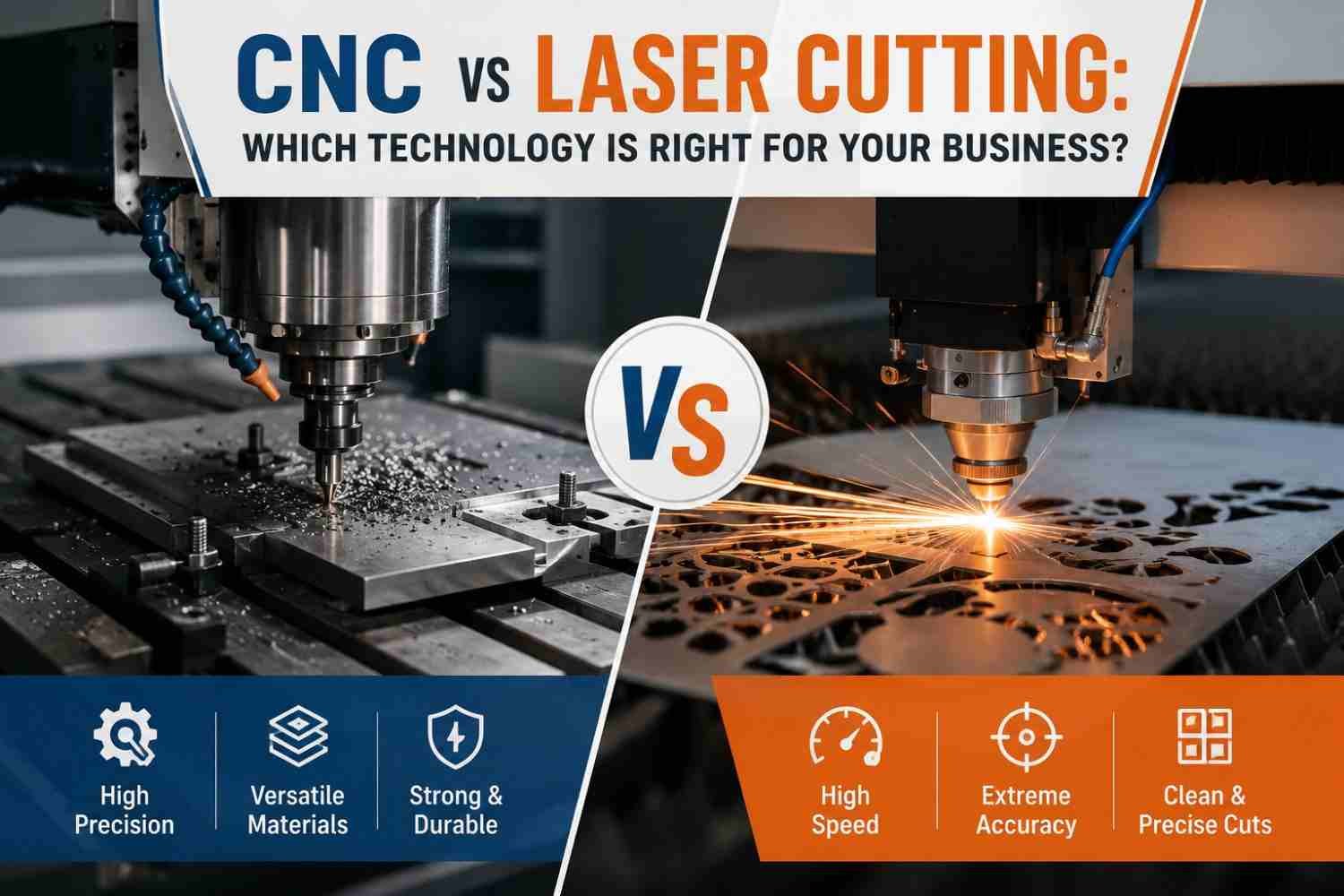
Choosing the right cutting technology can directly affect production speed, accuracy, material compatibility, and overall operating costs. Two of the most widely used options are CNC systems and laser cutting machines. Understanding CNC vs Laser Cutting can help manufacturers, fabricators, furniture makers, sign manufacturers, and other businesses select equipment that matches their production requirements.
While both technologies offer precision and automation, they work differently and are better suited to different materials and applications. This guide explains the key differences and helps you decide which solution may be the right fit for your business.
What Is CNC Cutting?
CNC cutting uses computer-controlled machinery to move a cutting tool along programmed paths. Depending on the machine and tooling, CNC systems can cut, carve, drill, mill, and shape materials with high repeatability.
CNC equipment is commonly used for wood, MDF, plywood, acrylic, plastics, foam, and some non-ferrous materials. For businesses working on detailed furniture components, decorative panels, signage, or customized products, CNC technology offers considerable flexibility.
For example, a business producing detailed wooden designs can use a CNC Wood Carving Machine to create consistent patterns and intricate shapes with less manual effort.
What Is Laser Cutting?
Laser cutting uses a concentrated beam of light to cut, engrave, or mark materials. The laser generates heat that melts, burns, or vaporizes material along a programmed cutting path.
Laser setups are pretty much prized for their speed, those super fine details, crisp borders, and the fact they can deliver repeatable outcomes, over and over again. Depending on the type of laser, you can point them at different materials like metals, acrylic, wood, cloth, plastics, and other compatible substrates.
When comparing CNC vs Laser Cutting, it is important to consider not only machine speed but also the type of material, thickness, design complexity, and finishing requirements.
CNC Cutting vs Laser Cutting: Key Differences
The main CNC cutting vs laser cutting difference is the cutting method. CNC machines generally use physical tools, while laser systems use concentrated light.
CNC machines can do a bunch of tasks just by swapping or using different cutting tools at the right times. That is why they’re so handy, especially if your project needs carving, milling, drilling, or even kind of three-dimensional shaping.
Laser cutting, on the other hand, is often picked when you need pretty precise two-dimensional cutting, plus intricate patterns that feel kind of finicky, and when the actual cutting path has to stay narrow.
In CNC and laser cutting differences, businesses should also consider factors such as tool wear, material thickness, edge quality, production volume, and maintenance requirements.
CNC Machine vs Laser Machine: Which Offers More Flexibility?
The CNC machine vs laser machine comparison largely depends on what your business produces.
CNC machines are really versatile for when a project needs cutting, and also carving, milling, drilling, or shaping. They’re especially helpful for companies that deal with thicker material, or when they need three-dimensional machining, you know, like work that actually has depth.
Laser machines can be highly effective for detailed designs, fast cutting, engraving, and applications requiring consistent fine lines. A suitable laser system can also reduce physical contact with the workpiece because there is no conventional cutting tool touching the material.
Therefore, CNC vs Laser Cutting should not be viewed as a competition where one technology is always better. The better choice depends on your production goals.
CNC Cutting Applications
There are many CNC cutting applications across woodworking, furniture manufacturing, interior design, signage, and product customization.
Typical applications include:
- Furniture components and panels
- Decorative wooden designs
- MDF and plywood cutting
- Signage and lettering
- Cabinet components
- Customized carvings
- Prototyping and model making
CNC technology is especially valuable when businesses need both cutting and shaping capabilities from the same equipment.
Laser Cutting Applications
Laser cutting applications cover a broad range of industries, including signage, advertising, packaging, textiles, interior decoration, and manufacturing.
Common uses include:
- Acrylic signage and displays
- Decorative patterns
- Fabric cutting
- Metal sheet processing
- Wood cutting and engraving
- Customized products
- Detailed nameplates and designs
Businesses that need detailed marking and engraving can also take a look at modern Laser Engraving Machines, especially for jobs that call for precision and repeatable results. It kind of helps when you want consistent output, not just a one-off look.
CNC vs Laser Cutting: Which One Should You Choose?
When you are evaluating CNC compared to laser cutting, I’d first figure out what materials you use most often. If your business is mainly about carving, milling, shaping, and you’re regularly dealing with thicker boards, then the CNC route might be the more practical option, generally speaking.
If your priority is fast, detailed cutting, engraving, fine patterns, or clean two-dimensional designs, a laser system may be more suitable.
Budget, production volume, available workspace, maintenance requirements, operator skills, and future expansion plans should also be considered before purchasing equipment.
Final Thoughts
There isn’t really any universal champ when it comes to CNC versus Laser Cutting. Both methods bring real wins, but the “best” situation is kinda different for each one. CNC systems can be super flexible for cutting, carving, and that sort of shaping, and laser technology tends to shine for precision cutting, engraving, and those intricate, finely detailed layouts.
By comparing material requirements, production volume, desired finish, machine capabilities, and long-term business goals, you can make a more informed investment decision. The right technology is ultimately the one that delivers the accuracy, productivity, and flexibility your business needs.