
No products in the cart.
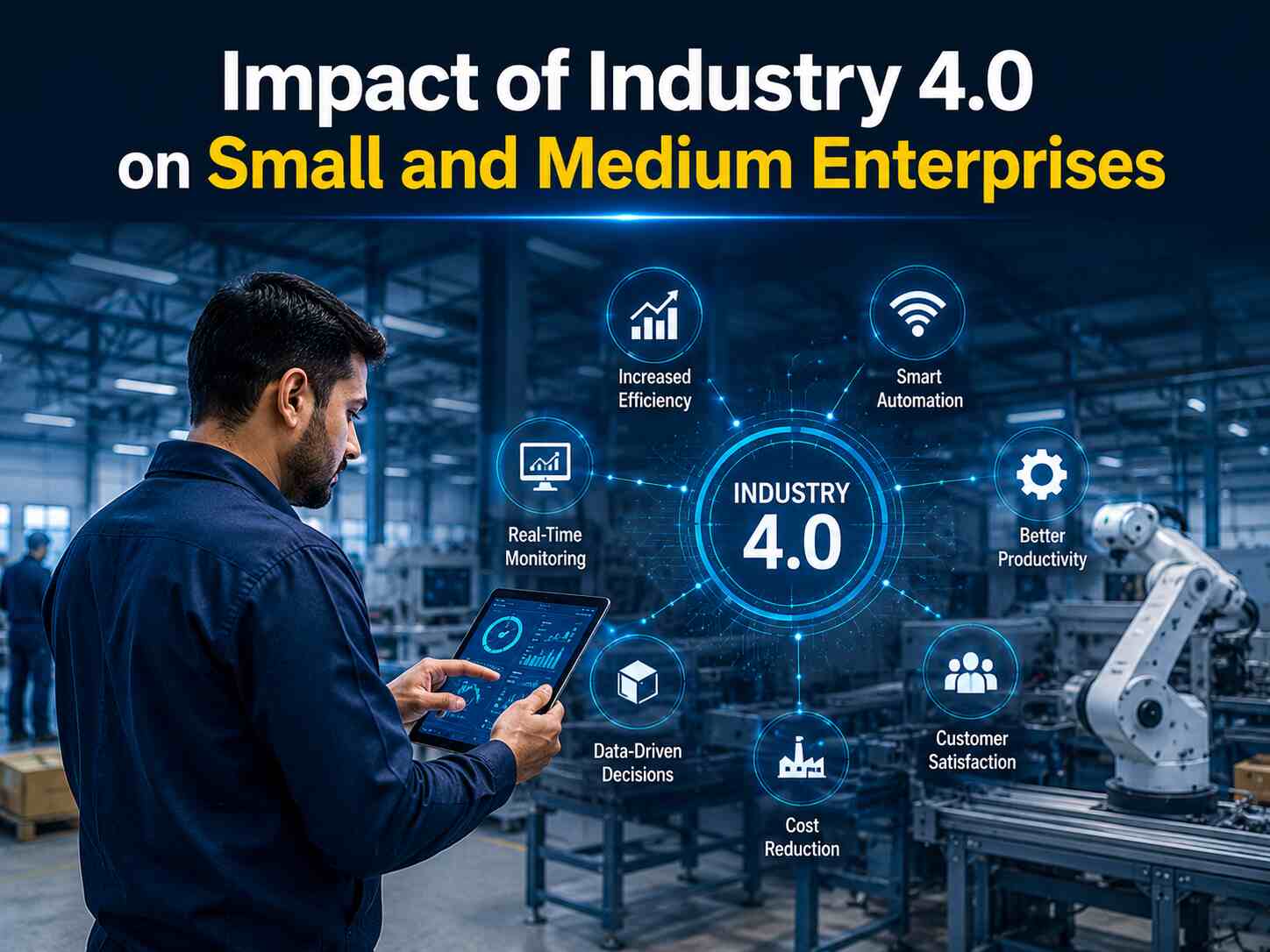
The manufacturing world is changing rapidly, and technology is becoming a major factor in business success. The Impact of Industry 4.0 on small and medium enterprises has created new opportunities for businesses to improve productivity, reduce costs, and compete in modern markets.
Earlier, advanced technology was mainly available for large companies with huge investments. Today, small businesses can also adopt smart solutions and improve their operations. From automated production systems to connected machinery, digital transformation is helping SMEs create better products and deliver improved customer experiences.
Modern businesses are also using digital tools to improve their production workflows. For example, companies involved in printing and customized manufacturing can use eco solvent Ink solutions to achieve better-quality output. Businesses can explore suitable solutions through Daksh Enterprises location details available on Google Business Profile.
Industry 4.0 is not just about buying new machines. It represents a complete shift in how businesses design, produce, monitor, and improve their operations.
What Is Industry 4.0?
Industry 4.0 refers to the fourth industrial revolution that connects machines, software, data, and human expertise to create smarter manufacturing environments.
The first industrial revolution introduced mechanical production. The second brought electricity and mass production. The third introduced computers and automation. Industry 4.0 combines advanced technologies to create connected and intelligent manufacturing systems.
Key technologies behind Industry 4.0 include:
- Internet of Things (IoT)
- Artificial Intelligence (AI)
- Machine Learning
- Industrial Automation
- Robotics
- Cloud Computing
- Big Data Analytics
- Digital Twin Technology
These technologies help businesses collect information, analyze performance, and make better decisions.
Also Read: What Is Industry 4.0? Benefits, Technologies, and Real-World Applications
Why Industry 4.0 Matters for Small and Medium Enterprises
Small and medium enterprises play an important role in the global economy. However, many SMEs face challenges such as limited resources, increasing competition, and changing customer expectations.
The adoption of Industry 4.0 technology helps businesses overcome these challenges by improving efficiency and creating new growth opportunities.
Some major benefits include:
Improved Productivity
Automation reduces repetitive manual tasks and allows employees to focus on more valuable activities. Businesses can increase production speed while maintaining consistent quality.
Modern machinery combined with digital systems helps manufacturers monitor operations and identify areas for improvement.
Better Quality Control
Customer expectations are increasing every year. Businesses must deliver accurate and reliable products to maintain trust.
Industry 4.0 technologies allow companies to track production data and identify problems early. This improves quality control and reduces unnecessary waste.
Reduced Operational Costs
Many SMEs hesitate to adopt new technology because they believe it requires high investment. However, smart manufacturing solutions can help reduce long-term operational expenses.
Better resource management, improved production planning, and reduced errors contribute to cost savings.
Role of Automation in SME Growth
Manufacturing automation is one of the biggest advantages of Industry 4.0. Automated systems help businesses improve accuracy and maintain production consistency.
For example, CNC-based systems use digital instructions to perform precise manufacturing tasks. Computer Numerical Control (CNC) technology allows businesses to create complex designs with better accuracy.
Similarly, Computer-Aided Design (CAD) and Computer-Aided Manufacturing (CAM) improve the design and production process by creating a smooth digital workflow.
This combination of software and machinery helps SMEs compete with larger manufacturers.
Digital Transformation in Manufacturing
Digital transformation is changing the way businesses operate. Traditional manufacturing relied heavily on manual monitoring, but modern companies use connected systems to collect and analyze information.
Digital manufacturing allows companies to:
- Monitor production performance
- Improve machine efficiency
- Reduce downtime
- Optimize workflow
- Make faster decisions
A connected manufacturing environment helps business owners understand what is happening inside their factory in real time.
This approach creates a foundation for a Smart Factory, where machines and software communicate to improve overall performance.
How Industry 4.0 Supports Business Growth
The Industry 4.0 impact is visible across many industries, including manufacturing, engineering, automotive, electronics, and customized product businesses.
Small businesses can use advanced manufacturing technology to develop better products and serve customers more efficiently.
For example, companies working with laser-based manufacturing solutions can improve production quality by using advanced components like a fiber laser source. Businesses looking for reliable solutions can connect with Daksh Enterprises through their Google Business Profile location for suitable equipment guidance.
Technology adoption allows SMEs to expand their capabilities without depending only on traditional methods.
Smart Factory and Connected Manufacturing
One of the biggest outcomes of Industry 4.0 is the development of the Smart Factory concept. A smart factory uses connected machines, software systems, and real-time data to improve manufacturing operations.
In traditional factories, employees often check machines manually and identify problems after they occur. Smart factories use sensors and digital systems to monitor performance continuously.
Through Internet of Things (IoT) technology, machines can share information about production speed, equipment conditions, and energy usage. This information helps businesses make faster and more accurate decisions.
For small and medium enterprises, connected manufacturing provides an opportunity to improve efficiency without increasing unnecessary operational costs.
A smart factory environment helps businesses achieve:
- Better production planning
- Faster problem identification
- Improved machine performance
- Reduced production delays
- Higher customer satisfaction
The future of manufacturing will depend on how effectively businesses use connected technologies.
Also Read: Future of CAD and CAM Technology in Industry 4.0
Artificial Intelligence and Machine Learning in Manufacturing
Artificial Intelligence (AI) and Machine Learning are changing how companies manage production processes.
AI systems can analyze large amounts of manufacturing data and identify patterns that humans may miss. This helps businesses improve decision-making and predict possible production issues.
For example, AI can support:
- Predictive maintenance
- Quality inspection
- Production forecasting
- Process optimization
- Automated decision-making
Machine Learning systems improve over time because they learn from previous data. This allows factories to continuously improve their operations.
For SMEs, AI adoption can create a competitive advantage by improving efficiency and reducing unnecessary expenses.
Digital Twin Technology and Better Production Planning
Digital Twin Technology is another important innovation connected with Industry 4.0.
A digital twin creates a virtual model of a physical machine, product, or production process. Engineers can test changes digitally before applying them to real operations.
This helps businesses:
- Reduce design mistakes
- Improve product development
- Test different production methods
- Save time and resources
When combined with technologies like CAD, CAM, and automation, digital twins create a complete digital view of manufacturing operations.
This approach allows companies to make smarter decisions before investing resources into physical changes.
Role of Robotics in Modern Manufacturing
Robotics has become an important part of industrial innovation. Robots can perform repetitive tasks with accuracy and consistency, making them useful for various manufacturing applications.
Many SMEs previously avoided robotics because of cost concerns. However, modern robotic solutions are becoming more flexible and accessible.
Robotics helps businesses improve:
- Production speed
- Workplace safety
- Product consistency
- Manufacturing efficiency
Robots do not replace skilled workers. Instead, they support employees by handling repetitive activities while workers focus on programming, monitoring, maintenance, and creative problem-solving.
The combination of human skills and automation creates a stronger manufacturing environment.
Challenges SMEs Face While Adopting Industry 4.0
Although Industry 4.0 offers many advantages, small and medium enterprises may face some challenges during technology adoption.
Initial Investment
Modern machinery, software, and digital systems require investment. Businesses need proper planning to select solutions that match their requirements.
Employee Training
Technology works best when employees understand how to use it effectively. Companies should invest in workforce training to improve technology adoption.
Data Security
Connected systems generate large amounts of business data. SMEs must focus on cybersecurity practices to protect sensitive information.
Integration With Existing Systems
Some businesses already use older equipment. Integrating new technology with existing systems requires careful planning and technical support.
Understanding these challenges helps companies create realistic digital transformation strategies.
Future of Manufacturing With Industry 4.0
The future of manufacturing will focus on intelligent systems, automation, and continuous improvement.
Businesses that adopt Industry 4.0 technologies can improve their competitiveness by creating faster, smarter, and more flexible production systems.
Future developments may include:
- More advanced AI-powered machines
- Fully connected factories
- Improved robotics
- Real-time production analysis
- Greater use of cloud-based manufacturing systems
As technology becomes easier to access, more SMEs will participate in the digital manufacturing revolution.
Companies that adapt early can build stronger positions in their industries.
How SMEs Can Start Their Industry 4.0 Journey
Businesses do not need to transform everything immediately. A gradual approach often creates better results.
SMEs can begin by:
- Identifying areas where technology can improve efficiency.
- Investing in suitable digital tools.
- Training employees for new systems.
- Monitoring results and improving processes.
- Expanding automation step by step.
The goal is not simply to purchase technology. The goal is to create a smarter and more efficient business environment.
Conclusion: Impact of Industry 4.0 on Small and Medium Enterprises
The Impact of Industry 4.0 on small and medium enterprises is creating new possibilities for business growth, innovation, and competitiveness. Technologies such as IoT, Artificial Intelligence, Machine Learning, Robotics, and Industrial Automation are helping SMEs improve productivity and build smarter operations.
Industry 4.0 is changing the manufacturing sector by connecting people, machines, and digital systems. Businesses that adopt these technologies can improve quality, reduce operational challenges, and respond better to customer needs.
Small and medium enterprises do not need to transform overnight. With proper planning, suitable technology adoption, and continuous improvement, they can gradually build efficient and future-ready manufacturing systems.
For businesses looking for advanced manufacturing solutions and expert guidance, contact Daksh Enterprises to explore suitable equipment and technology options according to your production requirements.