
No products in the cart.
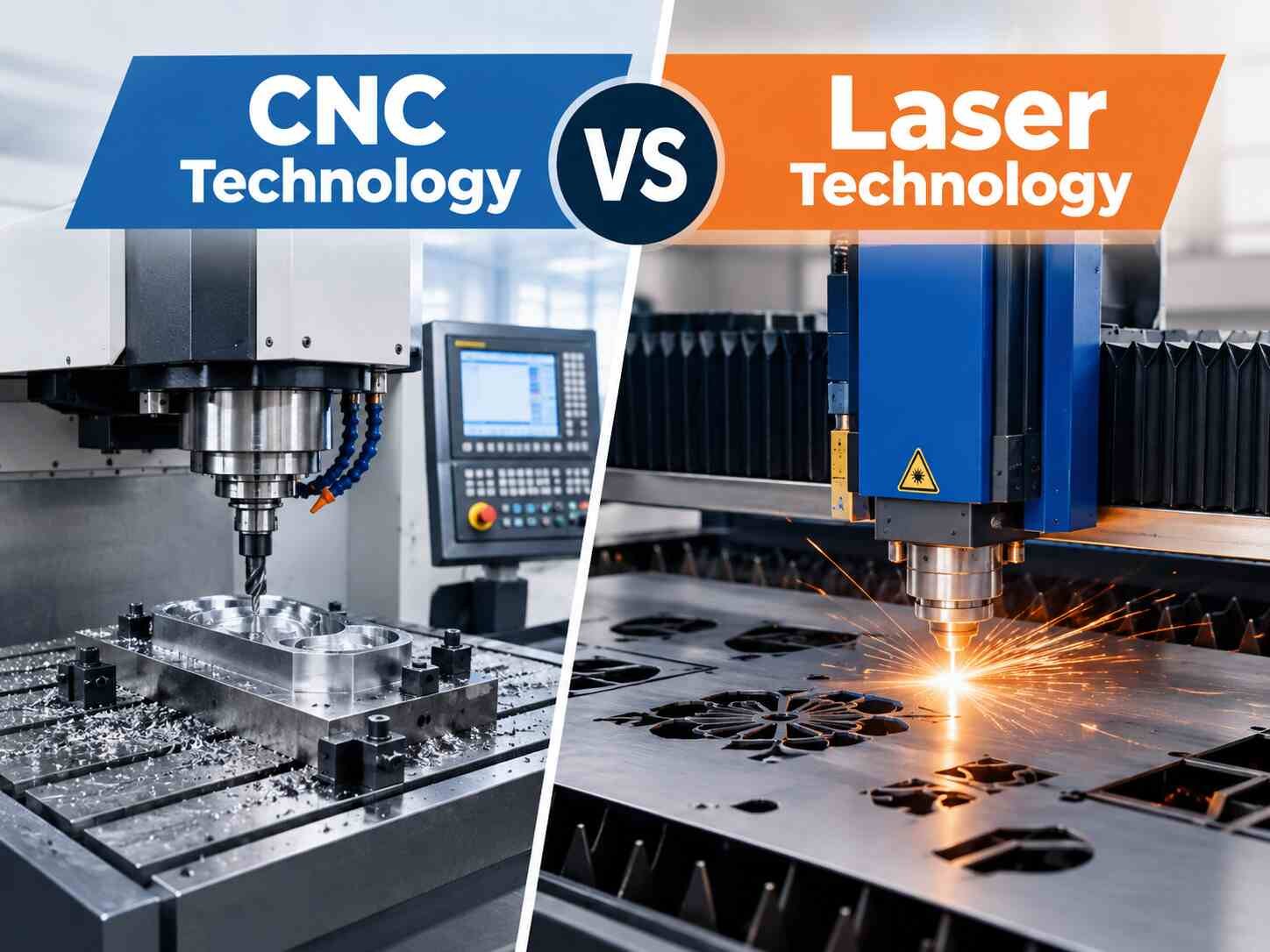
Choosing the right manufacturing equipment can feel confusing when CNC and laser machines appear to offer similar results. Both can automate cutting and shaping, but they work differently and suit different applications. If your business is considering a laser metal cutting machine, a CNC router, or another digital fabrication solution, the right choice depends on your material, design requirements, production volume and desired finish.
There is no universal winner in the CNC vs Laser Technology debate. The better option depends on what you actually need to manufacture. A machine that works brilliantly for detailed metal cutting may not be the right choice for woodworking, and vice versa.
What Is CNC Technology?
CNC stands for Computer Numerical Control. A computer controls machine movements according to programmed instructions. CAM software can generate toolpaths that tell the machine how to move, cut and perform different operations.
A CNC system generally uses a physical cutting tool. Depending on the machine, this may involve a spindle, router bit or other tooling. A CNC router, for example, is commonly used for woodworking and can perform cutting and boring operations.
A CNC spindle plays an important role because it rotates the cutting tool. The tool then physically removes material from the workpiece.
This approach makes CNC useful for applications that require cutting, carving, drilling, grooving or three-dimensional shaping.
Also Read: Laser vs Plasma Cutting: Which Is Better for Your Metal Cutting Business in 2026?
What Is Laser Technology?
Laser machines use a concentrated laser beam to process material. Depending on the machine design and application, laser systems can cut, engrave or mark different materials.
Modern laser systems can process various metals and non-metallic materials. TRUMPF notes that different laser technologies, including fiber and CO₂ systems, are used for different cutting applications and materials.
A Laser cutting machine can therefore be useful when a business needs precise profiles, detailed shapes or efficient sheet processing.
Laser technology also covers equipment such as a Laser engraving machine and a Fiber laser marker, which are designed for marking and engraving applications rather than simply cutting material.
CNC vs Laser Technology: How Do They Differ?
The main difference is the way each machine removes or processes material.
CNC machines generally use mechanical cutting tools. Laser machines use a focused beam of energy. That basic difference affects cutting speed, surface finish, tooling, maintenance and material compatibility.
| Factor | CNC | Laser |
| Cutting method | Mechanical tool | Focused laser beam |
| Tool contact | Usually physical contact | Non-contact process |
| Common applications | Cutting, carving, drilling, shaping | Cutting, engraving, marking |
| Woodworking | Strong application | Depends on material and machine |
| Metal processing | Depends on CNC type and tooling | Fiber laser systems are widely used |
| Engraving | Mechanical engraving | Fine laser engraving and marking |
| Tool wear | Cutting tools can wear | No conventional cutting bit |
| Material compatibility | Depends on tooling and machine | Depends on laser type and power |
The actual result depends on machine specifications, material and application. Even within one category, machines can differ significantly.
When Should You Choose a CNC Machine?
CNC can make sense when your business needs physical cutting and shaping across materials such as wood, MDF, plywood, plastics and other suitable workpieces.
A CNC wood router is widely associated with woodworking applications. For furniture, decorative panels, doors, signage and similar projects, CNC machining can provide repeatable programmed movements.
Businesses looking for a wood cutting machine may also consider CNC because the technology can support more than simple straight cuts. A suitable setup can perform carving, routing and other operations.
A CNC engraving machine can also create detailed designs on compatible materials. For deeper or three-dimensional work, CNC may provide capabilities that suit the application better than a surface-focused marking system.
For businesses involved in furniture and decorative manufacturing, a CNC wood carving machine can be particularly useful when the project involves detailed patterns or shaped surfaces.
When Is Laser Technology a Better Fit?
Laser technology can be useful when businesses need clean profiles, detailed engraving, marking or efficient processing of suitable sheet materials.
For metal fabrication, fiber laser systems are widely used. A laser metal cutting machine can process suitable metal sheets according to the machine’s specifications. TRUMPF describes fiber lasers as one of the technologies used for precision cutting across different metal applications.
A laser can also be suitable for an acrylic cutting machine application where the selected system is designed for the material.
Laser technology becomes particularly interesting when the business needs detailed patterns or markings. A laser engraving solutions workflow can support product identification, decorative designs, signage and other applications where precise surface processing matters.
Also Read: CNC Turning and Milling: What’s the Difference and Which Is Better?
Fiber Laser vs CO2 Laser
Not every laser machine uses the same laser source.
A Fiber laser is commonly used for metal processing. The specific cutting capability depends on factors such as machine power, material and cutting thickness.
A CO2 laser is another established laser technology and can be used for suitable non-metallic materials and certain industrial applications. The correct choice depends on the material and required process.
A Fiber laser source is a core component of a fiber laser system. Similarly, a CO2 laser tube is used in many CO₂ laser systems.
Cooling also matters. A Laser chiller can be part of a laser machine setup where controlled cooling is required. The exact cooling arrangement depends on the machine architecture and manufacturer specifications.
Which Technology Offers Better Cutting Accuracy?
It is tempting to ask which machine is simply “more accurate,” but that question needs context.
Cutting accuracy depends on the machine design, tooling or laser system, calibration, software, material, operating conditions and the specific job.
CNC machines can provide repeatable movements and precise programmed toolpaths. Autodesk describes CNC machining as suitable for applications requiring accuracy and repeatability.
Laser systems can also deliver precise cutting and engraving because the process uses a focused beam without conventional cutting-tool contact. However, the final result still depends on machine specifications and process settings.
So, instead of asking which technology is automatically more accurate, ask which technology provides the required accuracy for your material and application.
Cutting Speed, Production Volume and Operating Cost
Cutting speed matters when production schedules are tight, but speed should never be considered alone.
Material type, thickness, machine power, design complexity and processing method all influence production time.
For larger production volume, automation and repeatability become increasingly important. CNC systems can repeat programmed operations, while modern laser systems are also designed for automated production workflows. Autodesk highlights automation, flexibility and reproducibility as important CNC benefits.
Operating cost also depends on more than the purchase price. Businesses should consider tooling, electricity, consumables, maintenance, software, cooling requirements and operator needs.
A cheaper machine is not necessarily cheaper to operate over its useful life. The numbers need to be considered according to the actual workload.
Material Compatibility Matters More Than Machine Hype
Before buying any machine, identify the materials you actually work with.
A business handling wood may prioritize a CNC solution. A metal fabrication business may need a fiber laser system. A signage company may need equipment capable of processing acrylic, wood or other suitable materials.
This is where material compatibility becomes one of the most important buying factors.
Do not select a machine simply because it has impressive specifications. Check whether it can handle your material, required cutting thickness, design complexity and expected production requirements.
How to Choose Between CNC and Laser
Start with five practical questions:
- What materials do you process?
Identify your main materials before comparing machines.
- What type of work do you perform?
Cutting, carving, engraving and marking may require different technologies.
- What is your production volume?
Higher production demands may make automation and repeatability more important.
- What level of precision do you need?
Consider cutting accuracy, engraving precision and the required surface finish.
- What maintenance can your business support?
Check tooling, cooling, consumables, replacement parts and service requirements.
If you are researching CNC machining solutions, compare the complete workflow rather than focusing on one specification.
Businesses can also review machine tools, software compatibility, operator training and available technical support before making a purchase.
For local businesses researching equipment options, you can check the Daksh Enterprises location and local business information through its Google Business Profile before visiting or making an enquiry.
CNC vs Laser Technology: Which One Is Right for You?
The answer depends on your manufacturing goals.
Choose CNC when your work involves routing, carving, drilling, shaping or detailed three-dimensional machining. A CNC system can be especially useful for woodworking and applications where physical tooling is part of the process.
Choose laser technology when your work focuses on laser cutting, engraving or marking and the selected laser type matches your material. Fiber systems can be particularly relevant to suitable metal-cutting applications, while CO₂ systems can serve suitable non-metallic applications.
For some businesses, the decision may not be either-or. Different machines can serve different stages of production.
Final Thoughts
The CNC vs Laser Technology decision should start with your application, not the machine trend of the moment. Consider material compatibility, cutting thickness, cutting speed, accuracy, production volume, operating cost and maintenance before investing.
CNC and laser systems both have valuable roles in modern manufacturing. The right choice is the one that fits your actual workflow and helps you produce consistent results without creating unnecessary operational complexity.
Whether your focus is woodworking, signage, industrial engraving, metal fabrication or digital fabrication, compare machine capabilities carefully and ask for specifications relevant to your work. A well-matched machine can support productivity, repeatability and long-term manufacturing efficiency.