
No products in the cart.
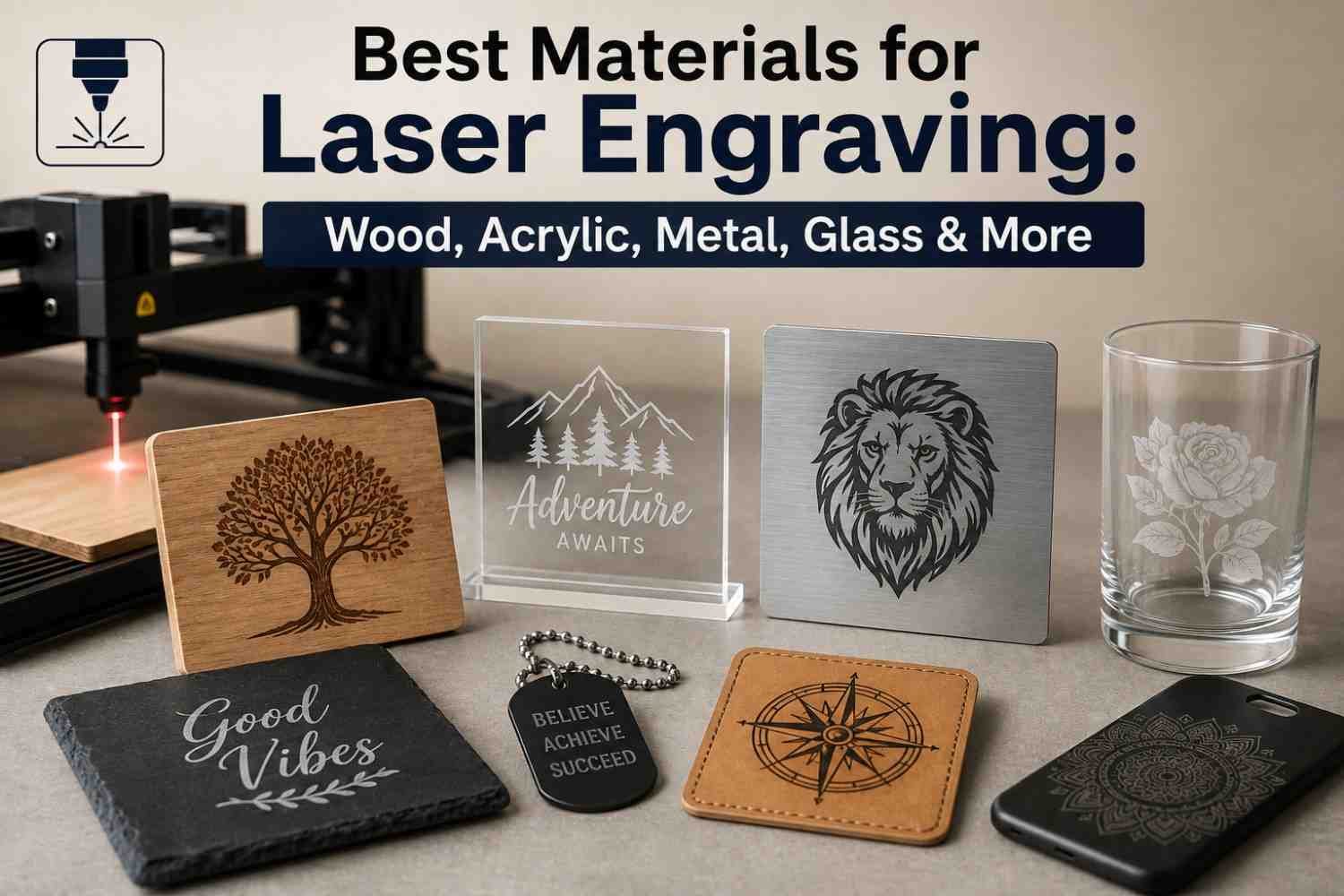
Laser engraving has become a popular solution for creating personalized products, industrial components, promotional items, signage, gifts, and decorative designs. However, achieving a clean and professional engraving is not only about choosing the right machine. Selecting the right material is equally important. Different materials react differently to laser energy, so understanding their properties can help you get better results.
If you are exploring the best materials for laser engraving, this guide will help you understand the most commonly used options, their applications, and what to consider before starting your next engraving project.
Why Material Selection Matters in Laser Engraving
Every material has a different density, surface finish, heat resistance, and reaction to laser energy. Some materials produce a dark, high-contrast mark, while others may create a subtle or textured finish.
Choosing the appropriate material can improve engraving quality, reduce wastage, and make the production process more efficient. It can also help you select suitable power and speed settings for your particular project.
Whether you are working with wood, acrylic, glass, or metal, knowing how each material behaves is essential for consistent results.
1. Wood: A Popular Choice for Laser Engraving
Wood is among the most widely used laser engraving materials because it’s really versatile and, honestly, pretty easy to engrave. Depending on what kind of wood it is, the laser can make appealing darkened patterns, as well as fine, detailed designs.
Common options include plywood, MDF, bamboo, hardwood, and softwood. Wooden materials are frequently used for nameplates, photo engravings, wall décor, trophies, signs, boxes, and personalized gifts.
When choosing wood, consider its thickness, moisture content, grain pattern, and surface quality. These factors can influence the final appearance of the engraving.
2. Acrylic: Ideal for Creative and Decorative Projects
Acrylic is another quite solid pick when you’re looking at the best materials for laser engraving machines. It is out there in so many colours, different thicknesses, and a couple of finishes, so it works for those creative plus commercial uses, depending on what you’re after.
Acrylic that is used for laser engraving is often chosen for things like signage, awards, nameplates, displays, keychains, decorative items, and corporate branding. A laser can create very exact and appealing results on the right acrylic sheets, so it really works well in practice.
Cast acrylic is generally preferred for engraving because it can produce a frosted appearance that makes designs and lettering stand out clearly.
3. Leather for Personalized Products
Leather can create a stylish and premium appearance when processed correctly. It is often used for wallets, belts, notebooks, bags, labels, footwear, and personalized accessories.
Natural leather can produce attractive variations because its texture and composition are not always uniform. Before engraving a large quantity, testing a small sample is recommended to determine the appropriate settings and desired finish.
Synthetic leather should be checked carefully because some artificial materials may contain substances that are unsuitable for laser processing.
4. Glass for Detailed and Elegant Engraving
Glass is pretty much a go-to material for customized gifts, plus decorative products, you know. When it comes to laser engraving on metal and glass, the use cases can end up being a bit of everything—bottles, mirrors, glass plaques, awards, windows, and those decorative panels as well.
Laser engraving on glass generally produces a frosted or matte effect rather than removing large amounts of material. The final appearance depends on the glass type, laser system, settings, and design.
Because glass can be sensitive to thermal stress, proper testing and controlled settings are important for achieving consistent results.
5. Metal for Industrial and Permanent Marking
Metal is widely used for industrial identification, product branding, serial numbers, tools, equipment labels, and personalized products. However, not every laser system is suitable for every type of metal.
Stainless steel, aluminium, brass, coated metals, and anodized aluminium kinda all need different ways of doing it. And depending on what you’re trying to use it for, the laser might engrave, or just mark, or even strip away a surface coating. Sometimes it does one thing, sometimes another.
For businesses handling professional metal marking, choosing the right laser technology is essential for achieving durable and readable results.
6. Other Materials Used for Laser Engraving
Apart from the popular choices above, several other materials can be considered among the best materials for laser engraving. These include paper, cardboard, cork, certain plastics, rubber designed specifically for laser processing, and coated materials.
Each material really needs its own setting, and safety concerns too, you know. Before you even begin production, make sure you confirm—at least once— that the material is compatible with your laser equipment and that it is safe to process.
How to Choose the Best Material for Your Project
Choosing the best materials for laser engraving depends on the purpose of the finished product. Consider the following factors:
- Application: Decide whether the material is intended for signage, gifts, industrial marking, décor, or branding.
- Laser compatibility: Check whether your laser type and power are appropriate for the selected material.
- Surface quality: Smooth and consistent surfaces generally make detailed designs easier to reproduce.
- Thickness: Material thickness can affect cutting and engraving performance.
- Finish: Consider whether you want a dark, frosted, textured, or subtle engraving.
- Testing: Always test a small sample before starting a large production batch.
Choosing the Right Laser Equipment
The quality of your results depends on both the material and the equipment used. Businesses should select machines according to their production requirements, material types, desired engraving depth, and workload.
For professional uses, dependable Laser Engraving Machines can bring in higher precision and steadiness across a whole set of projects. If your work also includes cutting sheets or making delicate forms, Laser Cutting Machines can match that engraving arrangement and add more production flexibility, too.
Final Thoughts
Getting a feel for the best materials for laser engraving really helps you choose what fits each little job. Wood works great for names and decorative pieces, while acrylic brings a lot of flexibility and those eye-catching finishes. Leather tends to suit premium accessories, glass allows those clean, elegant designs, and metal is valuable when you need durable industrial marking, you know.
The best materials for laser engraving really are going to depend on what machine you have, what you want to do, the kind of material you’re working with, and the finish you want at the end. It’s often worth trying a variety of materials plus settings beforehand, so you can reach more stable, repeatable results during production, not just a one-off outcome.
If you are looking for suitable laser equipment for different engraving and cutting applications, Daksh Enterprises can help you explore solutions according to your business requirements. With the right combination of material, machine, and settings, laser engraving can deliver precise, professional, and highly customized results.